One-year reflections of a grieving daughter

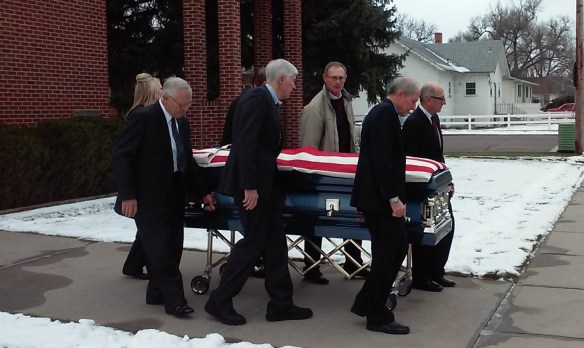
Last Thanksgiving, instead of gathering with loved ones to enjoy a feast, I huddled alone in front of my laptop, tears streaming down my face.  My father had died just two days earlier, and I spent the holiday planning his funeral.

While I felt the intense void of dad’s absence this Thanksgiving, I also experienced gratitude for the progress I’ve made in my grief-journey.

Here are eleven things I learned about grieving during this past year:

1. Grieving can begin while a loved one is still alive. I began feeling the deep ache of losing my father long before he died.  This is called “anticipatory grief.”   Some end-of-life journeys are very long good-byes.  As our loved one declines, we not only grieve incremental losses of  physical and mental abilities, we begin to pre-grieve losing him or her completely.
1205151138a-2

2.  Everyone expresses grief differently. I didn’t cry at my dad’s funeral, even when I gave a tribute.  What people never saw were the countless times I privately wept from the depths of my soul.  It’s important to remember that outward appearances may not tell the whole story.  A person who looks like they “have it all together” may be falling apart on the inside.  On the flip side, individuals who freely let their emotions show may not be as fragile as they appear.

3.  Grief doesn’t follow a timeline. The “five stages of grief,” (denial and isolation, anger, bargaining, depression and acceptance) [1] are interpreted by some to mean that once we check off the final box, we are done mourning.  In reality, grieving does not follow a predictable path, nor is it something we “finish.” Major loss changes us forever—and it should.  To put pressure on ourselves or others to “just get over it and move on” is both unkind and unrealistic.

4.  Grief hinders life functioning. I became frustrated during my first few weeks back at work because I made many more errors than usual.  Later I was reminded that a grieving person’s body, brain, and emotions are in a compromised state, making it harder to focus and think critically.  In fact, several grief recovery resources state that it’s wise to avoid making any major life decisions for at least six months following a significant loss. [2]

5.  It gets easier. Really, it does.  Recently I’ve been following the grief-journey of a man who lost his wife to cancer.  His sorrow is so profound that he cannot fathom ever feeling better.  I used to feel the same way.  But one day, at about the 3-month mark, I noticed I could sometimes make it through the day without crying.  My grief “symptoms” gradually lessened from that point on. While everyone progresses at a different rate, it does get easier. Continue reading

A cancer survivor’s perspective: the difference between faith and trust

My best friend from college, Kelly, is a two-time cancer survivor.  Breast cancer first struck her at the young age of 31.  Kelly was a mom of two small boys and a new missionary in Africa when she discovered a lump.  The diagnosis changed the course of her family’s lives, as they had to leave their overseas post and move back to the United States for Kelly’s treatment.

The dreaded disease returned fourteen years later.  This time, Kelly faced a much more aggressive treatment regimen, including a mastectomy and chemotherapy.  The side effects of chemo decimated her, both physically and emotionally.

In God’s mercy, she eventually recovered and has now been cancer-free for eight years.  Nevertheless, she understandably still battles anxiety when it’s time for her periodic checkups.  She knows there’s always a chance the doctor could deliver bad news. Continue reading

God is Good . . . some of the time?

sacred-datura-flower-from-anza-borrego-desert-725x544[1]

I stood wearily outside the mortuary, listening to the elderly woman share about her husband’s recent passing.

“We were on our way to visit family. He just got into the car, closed his eyes and he was gone!” She went on to describe how it was such a blessing that he went so fast and painlessly, exclaiming, “God is so good!”

My father had passed away just two days before her husband, and his death was long and drawn-out. All I could say in return was, “it didn’t work out that way for my dad.”

Since that encounter, I’ve been more aware of when people use the phrase, “God is good.” And I’ve noticed that they typically say it when something positive has happened.

God answered a prayer the way they wanted it.

God healed someone.

God provided something they needed.

God made something easier.

Which begs the question: Is God only good when life is good? In other words, is God only good – some of the time? Continue reading

Cherish Your Parents (while you can)

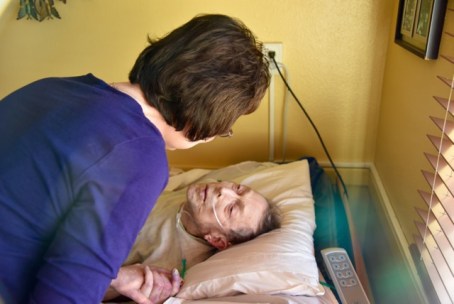
Cherish. This one-word comment was left on my Facebook page by a long-time friend. I had just posted the news that my brothers and I were holding bedside vigils during our dad’s final days. Looking back, I realize that my friend’s brief post hit the mark.

Dad gazing at Jane

While helping oversee the physical aspects of dad’s end-of-life care was of paramount importance, it was even more critical to treasure our final relational connections:

. . . to see a light of recognition in his eyes;

. . . to tell him how much he meant to me;

. . . to feel his parched lips kiss my hand.

These are moments I will always cherish.

If you still have your parents, I hope you’ll have the bittersweet privilege of being with them in their final hours.

But more importantly, I urge you not to wait until their lives are slipping away to treasure them.

Begin cherishing them NOW.

Continue reading

Saying Farewell to Mom and Dad’s House

My co-worker and I were discussing plans for spring break from the college where we work.  “I’m going home,” she declared.  I knew this meant she would be traveling to visit her mom and dad several thousand miles away.   Though married and middle-aged, home was still where her parents lived.

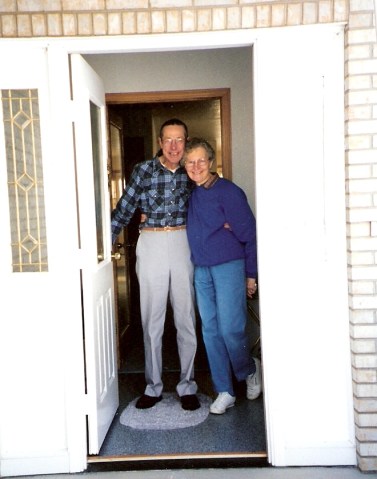
Mom and Dad at door

Dad and Mom

I could relate.  The places where my mom and dad resided always represented “home” to me, no matter what my age.  Their house possessed an irresistible magnetic force, especially during the holidays.  It was where I could drop in anytime, be warmly welcomed, and stay as long as I wanted.  Mom and Dad’s home represented familiarity, comfort, love, and security.  It was my soft place to land.

Even after mom passed away eight years ago, dad remained living in their house, so it continued to serve as a central gathering place for our family.  For years I dreaded the day when dad would no longer be able to live there and my brothers and I would be faced with dissolving his estate.  Though I knew it was inevitable, the thought overwhelmed me—not only because of the magnitude of the task, but because it would mean losing my home base.

This past fall that time sadly arrived for our family.  After our dad’s health turned, we were faced with disassembling his home filled with a lifetime of memories. Continue reading