A cancer survivor’s perspective: the difference between faith and trust

My best friend from college, Kelly, is a two-time cancer survivor.  Breast cancer first struck her at the young age of 31.  Kelly was a mom of two small boys and a new missionary in Africa when she discovered a lump.  The diagnosis changed the course of her family’s lives, as they had to leave their overseas post and move back to the United States for Kelly’s treatment.

The dreaded disease returned fourteen years later.  This time, Kelly faced a much more aggressive treatment regimen, including a mastectomy and chemotherapy.  The side effects of chemo decimated her, both physically and emotionally.

In God’s mercy, she eventually recovered and has now been cancer-free for eight years.  Nevertheless, she understandably still battles anxiety when it’s time for her periodic checkups.  She knows there’s always a chance the doctor could deliver bad news. Continue reading

Is singleness a tragedy?

bg-wedding[1]

I finally got the courage to approve the comment.  It was written in response to a post I published some time ago about feeling left behind in the marriage department. The reader incorrectly interpreted that I was making light of my struggle, and wrote, “Please don’t refer to heartfelt sadness as a ‘pity party.’ To leave this earth without marriage and family is a tragedy for too many people.”

While she missed the overall intention of the post, which was to celebrate how God helped me focus on the blessings in my life, what continued to gnaw at me was her statement that being single is a tragedy.

If what she wrote is true, then nearly half of the adult population in the United States [1] are living  tragic lives.

To put it more bluntly, it means my life is a tragedy! Continue reading

God is Good . . . some of the time?

sacred-datura-flower-from-anza-borrego-desert-725x544[1]

I stood wearily outside the mortuary, listening to the elderly woman share about her husband’s recent passing.

“We were on our way to visit family. He just got into the car, closed his eyes and he was gone!” She went on to describe how it was such a blessing that he went so fast and painlessly, exclaiming, “God is so good!”

My father had passed away just two days before her husband, and his death was long and drawn-out. All I could say in return was, “it didn’t work out that way for my dad.”

Since that encounter, I’ve been more aware of when people use the phrase, “God is good.” And I’ve noticed that they typically say it when something positive has happened.

God answered a prayer the way they wanted it.

God healed someone.

God provided something they needed.

God made something easier.

Which begs the question: Is God only good when life is good? In other words, is God only good – some of the time? Continue reading

Cherish Your Parents (while you can)

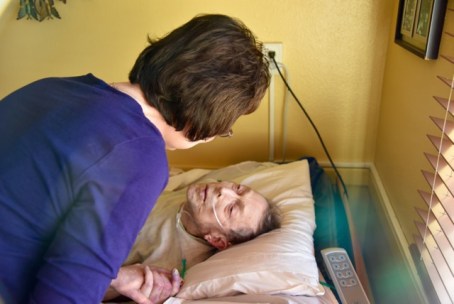
Cherish. This one-word comment was left on my Facebook page by a long-time friend. I had just posted the news that my brothers and I were holding bedside vigils during our dad’s final days. Looking back, I realize that my friend’s brief post hit the mark.

Dad gazing at Jane

While helping oversee the physical aspects of dad’s end-of-life care was of paramount importance, it was even more critical to treasure our final relational connections:

. . . to see a light of recognition in his eyes;

. . . to tell him how much he meant to me;

. . . to feel his parched lips kiss my hand.

These are moments I will always cherish.

If you still have your parents, I hope you’ll have the bittersweet privilege of being with them in their final hours.

But more importantly, I urge you not to wait until their lives are slipping away to treasure them.

Begin cherishing them NOW.

Continue reading

Faced with a Life or Death Decision

A flood of fresh tears flowed as I thumbed through the twenty-eight page  document.  The Medicare “Summary Notice” coldly spelled out the amounts paid to the mile-long list of medical providers.   I couldn’t help but re-live the experience of dad’s final days as I moved chronologically through the papers.  The final ER visit.  Multiple blood draws.  An electrocardiogram.  Numerous ex-rays and a CT scan.  The chest tap and chest tube. The ambulance ride back to the nursing home.  The physician’s final visits.

Perhaps what stood out most was the ER doctor’s description: “Emergency department visit, problem with significant threat to life or function.”

ER signDad was, indeed, gravely ill when he landed in the emergency room in mid-November.  His white blood-cell count was sky-high, indicating something was seriously wrong.  When I arrived at his bedside, I couldn’t help but look at his frail body and think that we might not be there had it not been for a snap decision made by a physician a month earlier. Continue reading