
Why I’m thankful for my limitations

A wave of melancholy washed over me the day of the holiday concert.   I was sad because I wouldn’t be singing with the local choral ensemble.group_5121

It’s not because the group didn’t want me.

This past fall I was honored to receive an invitation to join the choir, and began attending rehearsals.  My soul was immediately enlivened by the process of learning and making music again.

But I was simultaneously confronted with an old nemesis—my relentless battle with chronic fatigue.

The two-hour Sunday evening rehearsals were intense, with no breaks.  During each practice my body began to crash at about the half-way mark, leaving me hanging on by my fingernails for the duration.  Worse yet, I paid for it dearly for several days afterwards, struggling to function at work because of the resulting exhaustion, headaches, and dizzy spells.

Though I hated to do it, I knew I had to withdraw from the group. My health limitations had gained the upper hand once again.

Perhaps you know the feeling, even though your situation is different.  We all experience limitations of some sort—physical, mental, financial, educational, and emotional, to name a few.

It’s natural to feel frustrated or sad like I did when obstacles keep us from something we want.

But what if we could transform our view of the things that limit us (especially the things we cannot change) to a positive perspective?

th265r7k9f Continue reading

One-year reflections of a grieving daughter

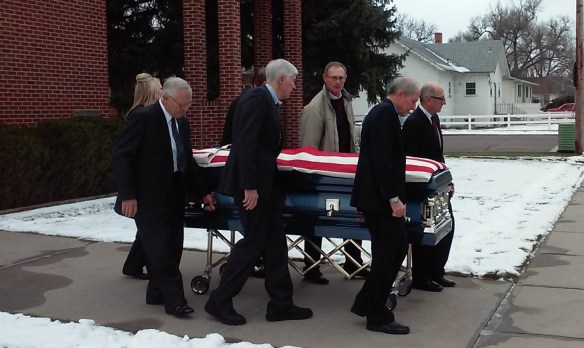
Last Thanksgiving, instead of gathering with loved ones to enjoy a feast, I huddled alone in front of my laptop, tears streaming down my face.  My father had died just two days earlier, and I spent the holiday planning his funeral.

While I felt the intense void of dad’s absence this Thanksgiving, I also experienced gratitude for the progress I’ve made in my grief-journey.

Here are eleven things I learned about grieving during this past year:

1. Grieving can begin while a loved one is still alive. I began feeling the deep ache of losing my father long before he died.  This is called “anticipatory grief.”   Some end-of-life journeys are very long good-byes.  As our loved one declines, we not only grieve incremental losses of  physical and mental abilities, we begin to pre-grieve losing him or her completely.

1205151138a-2

2.  Everyone expresses grief differently. I didn’t cry at my dad’s funeral, even when I gave a tribute.  What people never saw were the countless times I privately wept from the depths of my soul.  It’s important to remember that outward appearances may not tell the whole story.  A person who looks like they “have it all together” may be falling apart on the inside.  On the flip side, individuals who freely let their emotions show may not be as fragile as they appear.

3.  Grief doesn’t follow a timeline. The “five stages of grief,” (denial and isolation, anger, bargaining, depression and acceptance) [1] are interpreted by some to mean that once we check off the final box, we are done mourning.  In reality, grieving does not follow a predictable path, nor is it something we “finish.” Major loss changes us forever—and it should.  To put pressure on ourselves or others to “just get over it and move on” is both unkind and unrealistic.

4.  Grief hinders life functioning. I became frustrated during my first few weeks back at work because I made many more errors than usual.  Later I was reminded that a grieving person’s body, brain, and emotions are in a compromised state, making it harder to focus and think critically.  In fact, several grief recovery resources state that it’s wise to avoid making any major life decisions for at least six months following a significant loss. [2]

5.  It gets easier. Really, it does.  Recently I’ve been following the grief-journey of a man who lost his wife to cancer.  His sorrow is so profound that he cannot fathom ever feeling better.  I used to feel the same way.  But one day, at about the 3-month mark, I noticed I could sometimes make it through the day without crying.  My grief “symptoms” gradually lessened from that point on. While everyone progresses at a different rate, it does get easier. Continue reading

A cancer survivor’s perspective: the difference between faith and trust

My best friend from college, Kelly, is a two-time cancer survivor.  Breast cancer first struck her at the young age of 31.  Kelly was a mom of two small boys and a new missionary in Africa when she discovered a lump.  The diagnosis changed the course of her family’s lives, as they had to leave their overseas post and move back to the United States for Kelly’s treatment.

The dreaded disease returned fourteen years later.  This time, Kelly faced a much more aggressive treatment regimen, including a mastectomy and chemotherapy.  The side effects of chemo decimated her, both physically and emotionally.

In God’s mercy, she eventually recovered and has now been cancer-free for eight years.  Nevertheless, she understandably still battles anxiety when it’s time for her periodic checkups.  She knows there’s always a chance the doctor could deliver bad news. Continue reading

Is singleness a tragedy?

bg-wedding[1]

I finally got the courage to approve the comment.  It was written in response to a post I published some time ago about feeling left behind in the marriage department. The reader incorrectly interpreted that I was making light of my struggle, and wrote, “Please don’t refer to heartfelt sadness as a ‘pity party.’ To leave this earth without marriage and family is a tragedy for too many people.”

While she missed the overall intention of the post, which was to celebrate how God helped me focus on the blessings in my life, what continued to gnaw at me was her statement that being single is a tragedy.

If what she wrote is true, then nearly half of the adult population in the United States [1] are living  tragic lives.

To put it more bluntly, it means my life is a tragedy! Continue reading

Breaking my white bubble

NOTE: This post was written in 2016 during the time our nation was reeling over the police shootings of Alton Sterling and Philando Castile.  I have re-posted it in on Facebook in June 2020 as our country reacts to the death of George Floyd.


A few weeks ago I was stuck behind a slow truck on my way to work.  When the truck finally turned off, the road opened up and I accelerated to make up a little time.  As I zoomed towards the railroad tracks, I glimpsed a police car out of the corner of my eye.  It was too late to slow down.  I knew I was busted.

Know-Your-Rights-Traffic-Stops-1-The-Leaf-Online[1]

The patrol car’s lights began flashing the moment I whizzed by, and I dutifully pulled over to the shoulder. While the cruiser crept up behind me, I reached for my purse, preparing to pull out my driver’s license.  The officer approached my car and I rolled down my window.

The imposing man in blue bent over and said, “Oh, it’s you!”

“Hi,” I said sheepishly, recognizing him, too.  I knew the officer from when I had worked for the City several years earlier.

I reached for my driver’s license.  “Oh, put that away,” he said casually.  We chatted for a while and in what seemed like almost an afterthought, he said “and slow down.”

I drove off without a ticket, realizing I had been shown favor (he had said more than once that if an officer who didn’t know me had made the stop, I probably would have gotten a ticket.)

A few days later I was driving home from work and saw someone else stopped by a police car, not far from where I was pulled over.  It was a young black man, and two police officers were sitting in the patrol car behind him.

In light of recent national events, I couldn’t help but wonder—were both the driver and the officers on heightened alert and concerned for their safety?

Continue reading